Archived Content
This student profile has been archived and is no longer being updated.
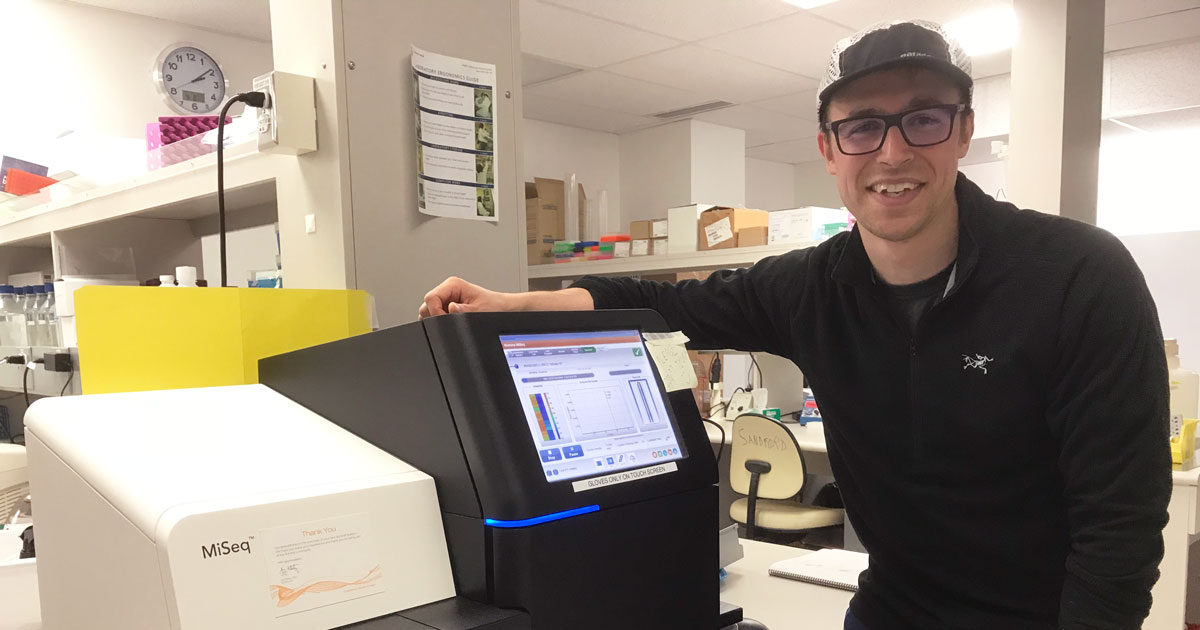
In short, I enjoy the process of developing novel solutions to complex problems. It is thrilling to be one of the few people in the world working to answer a specific question that could have major implications to technology and/or medicine. Furthermore, the PhD degree meshes well with the greater demand for evidence-based medical practice. The need for clinicians to be able to understand both basic science and clinical practice is becoming ever more critical with the remarkable advancements in molecular biology.
UBC is a world-renowned research and medical institution situated between the natural beauty of mountains, forests, and ocean. The supervision of the PhD portion of my MD/PhD degree by Dr. Liam Brunham’s lab at the University of British Columbia’s Heart and Lung Institute (HLI) was a major factor influencing my decision to study at UBC. The HLI has an established ability to perform effective translational research among a unique confluence of expertise: lipids, genetics, sepsis, and critical care medicine. Due to my previous and ongoing interests in microbiology, the greatest draw to the Brunham lab was his ongoing collaborations with the institution’s sepsis investigators (Dr. John Boyd, Dr. Keith Walley, Dr. James Russel).
UBC’s Undergraduate MD Program stresses the combination of clinical studies, research, and teaching. The recent modification of the UBC Undergraduate MD Program reflects these priorities. The MD Program’s goals address the importance of innovation, research, internationalization, faculty development, and a productive learning environment. These skill sets will be critical for me to further develop as an aspiring physician scientist. UBC’s Undergraduate Program also offers unique Flexible Enhanced Learning courses early in the curriculum which will be a fantastic opportunity to tie my research training to clinical issues. Most importantly, the MD/PhD program's mission “to develop ‘physician-scientists’ with training in knowledge translation between scientific/clinical and patient population treatment settings” matches my own.
Location, location, location. The access to the great outdoors (mountains, ocean, beaches) is remarkable.
Outside academics, I train and participate in endurance races (ultramarathons, triathlons), brew beer, and build LEGO.
1) Take initiative in your degree and what you want to get out of the experience. 2) Make sure to talk to plenty of other graduate students and researchers. Otherwise, grad school can be a very steep learning curve. 3) It is too easy to become an experiment lab rat. Make sure to take time to think and reflect on the purpose, relevance, and implications, of your experiments.
My research focuses on the interplay between the genetic regulation of lipoproteins ("good" and "bad" cholesterol) and inflammatory diseases such as sepsis and atherosclerosis. Sepsis is a systemic exaggerated host immune response to infection that has a high mortality rate, limited effective treatments, and is a considerable economic health care burden. The Brunham lab and collaborators at St. Paul’s Centre for Heart and Lung Innovation have observed that patients’ with low levels of high-density lipoprotein (HDL) have a poor sepsis prognosis. However, mechanistic understanding of why HDL levels are low in certain septic patients is unknown. Differences in sepsis parthenogenesis and outcomes has the potential to be explained by variations in human genetics. This work will provide insights into improved management and generation of better treatment options for sepsis.