Archived Content
This student profile has been archived and is no longer being updated.
I've always enjoyed learning. Doing research in graduate school pushes you to the limits of your knowledge - you're always learning something new and it's addicting, in a way. This research project in particular interested me because of its potential for contributing to increased food security and environmental health.
I've loved the west coast for a long time and have friends in the area, so knew I wanted to be in Vancouver. UBC seemed like the obvious choice due to its reputation and outstanding academic resources. It's also been a privilege to work with my supervisor, who is a leader in the field.
I came to the Faculty of Forestry primarily to work with my supervisor, but since I've been here I've been impressed by how helpful and personal all of the faculty and staff are.
I've lived in small towns or small cities my whole life, so the biggest surprise about UBC and Vancouver is just how much they have to offer. At UBC especially it's nice to be surrounded by colleagues who are motivated, experienced, and gifted at what they do.
I completed a masters degree before going into my PhD, so that helped me a lot in understanding how research is done. I also took a couple of years off after my master's degree and I think that was valuable to help me assess whether I really wanted to do a PhD (I do) and to figure out where higher education fits in the priorities of my life.
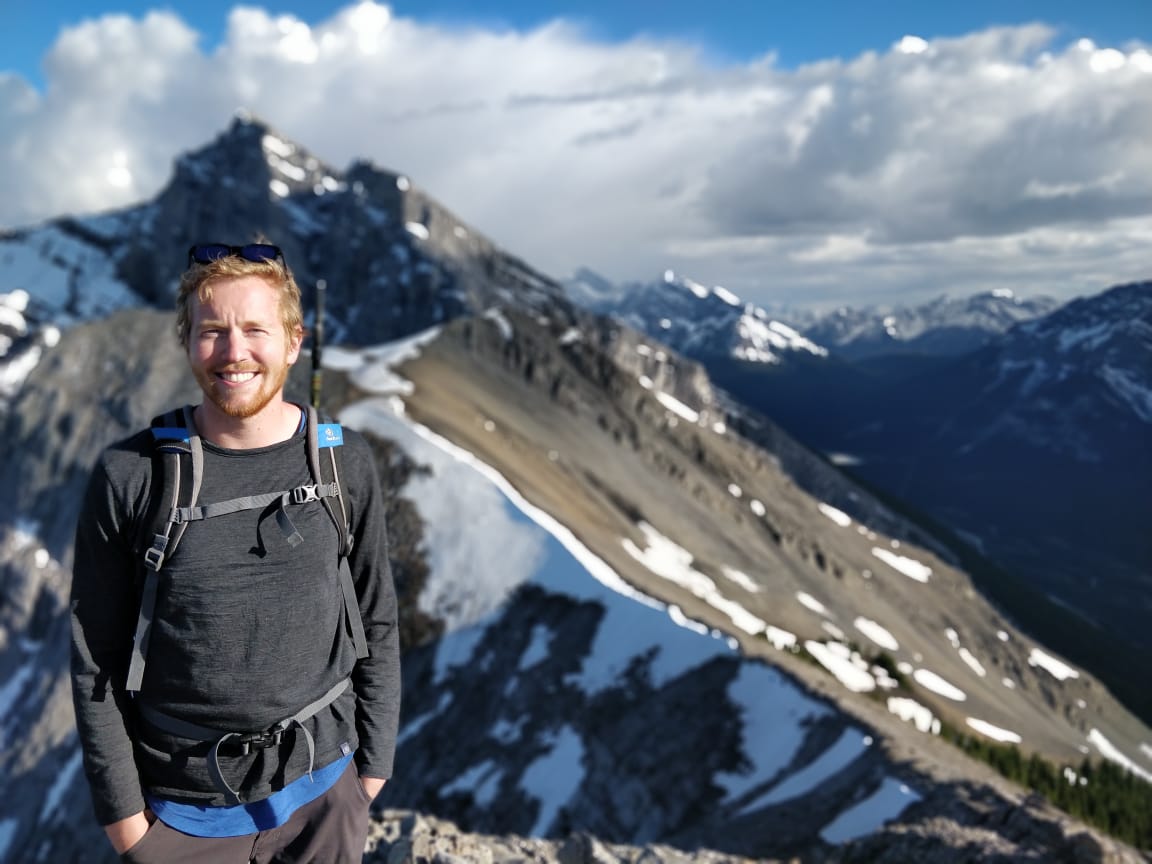
I love the outdoors, so as much hiking, camping, and skiing as I can get in. Otherwise, I used to teach piano so still play around on that and I enjoy cooking and reading.
Grad school is a marathon, not a sprint. Mental health and financial issues are widespread among graduate students - aim for balance and be gentle on yourself.
The air contains a rich diversity of biotic material and transports many economically important human and plant pathogens. However, relatively little is known about the spatial and temporal dynamics of airborne microorganisms. One obvious application of such knowledge is to monitor the presence of airborne plant pathogens, which could lead to predictive disease models and improved management of disease. My research project will utilize metabarcoding and next-generation sequencing to characterize the airborne fungal diversity in Alberta over the course of the growing season. We will also monitor airborne concentrations of a particularly devastating crop pathogen, Sclerotinia sclerotiorum (causal agent of white mould), and its dispersal across the Canadian Prairies. From this information, we will develop a predictive model to determine when the risk of white mould is high, based on the presence of airborne spores.