Karen Lok Yi Wong
Doctor of Philosophy in Social Work (PhD)
Understand the processes of the complex healthcare systems from the experiences of Chinese people living with dementia in Vancouver: The use of a process map
Review details about the recently announced changes to study and work permits that apply to master’s and doctoral degree students. Read more
The PhD in Social Work at UBC is a research degree. Built around a small number of common courses, the program draws on the diverse range of courses available across the campus to advance the student's individualized plan of study. Part-time Doctoral Classification is available for domestic students.
Our students come from around the world and are supervised by faculty with expertise in their particular field of study. No student is admitted without the commitment of a designated supervisor.
The Faculty of Graduate and Postdoctoral Studies establishes the minimum admission requirements common to all applicants, usually a minimum overall average in the B+ range (76% at UBC). The graduate program that you are applying to may have additional requirements. Please review the specific requirements for applicants with credentials from institutions in:
Each program may set higher academic minimum requirements. Please review the program website carefully to understand the program requirements. Meeting the minimum requirements does not guarantee admission as it is a competitive process.
Applicants from a university outside Canada in which English is not the primary language of instruction must provide results of an English language proficiency examination as part of their application. Tests must have been taken within the last 24 months at the time of submission of your application.
Minimum requirements for the two most common English language proficiency tests to apply to this program are listed below:
Overall score requirement: 93
Reading
22
Writing
21
Speaking
21
Listening
22
Overall score requirement: 6.5
Reading
6.0
Writing
6.0
Speaking
6.0
Listening
6.0
Some programs require additional test scores such as the Graduate Record Examination (GRE) or the Graduate Management Test (GMAT). The requirements for this program are:
The GRE is not required.
All applicants have to submit transcripts from all past post-secondary study. Document submission requirements depend on whether your institution of study is within Canada or outside of Canada.
Many programs require a statement of interest, sometimes called a "statement of intent", "description of research interests" or something similar.
Students in research-based programs usually require a faculty member to function as their thesis supervisor. Please follow the instructions provided by each program whether applicants should contact faculty members.
Permanent Residents of Canada must provide a clear photocopy of both sides of the Permanent Resident card.
All applicants must complete an online application form and pay the application fee to be considered for admission to UBC.
| Fees | Canadian Citizen / Permanent Resident / Refugee / Diplomat | International |
|---|---|---|
| Application Fee | $118.50 | $168.25 |
| Tuition * | ||
| Installments per year | 3 | 3 |
| Tuition per installment | $1,912.84 | $3,360.55 |
| Tuition per year (plus annual increase, usually 2%-5%) | $5,738.52 | $10,081.65 |
| Int. Tuition Award (ITA) per year (if eligible) | $3,200.00 (-) | |
| Other Fees and Costs | ||
| Student Fees (yearly) | $1,169.35 (approx.) | |
| Costs of living | Estimate your costs of living with our interactive tool in order to start developing a financial plan for your graduate studies. | |
Applicants to UBC have access to a variety of funding options, including merit-based (i.e. based on your academic performance) and need-based (i.e. based on your financial situation) opportunities.
All full-time students in UBC-Vancouver PhD programs will be provided with a funding package of at least $40,000 for each of the first four years of their PhD from September 2026. The funding package may consist of any combination of internal or external awards, teaching-related work, research assistantships, and graduate academic assistantships. Please check with your prospective graduate program for specific details of the funding provided to its PhD students.
This results in a net balance (any funding provided to the student minus tuition and fees) mean of $23,212 and median of $22,416.
All applicants are encouraged to review the awards listing to identify potential opportunities to fund their graduate education. The database lists merit-based scholarships and awards and allows for filtering by various criteria, such as domestic vs. international or degree level.
Many professors are able to provide Research Assistantships (GRA) from their research grants to support full-time graduate students studying under their supervision. The duties constitute part of the student's graduate degree requirements. A Graduate Research Assistantship is considered a form of fellowship for a period of graduate study and is therefore not covered by a collective agreement. Stipends vary widely, and are dependent on the field of study and the type of research grant from which the assistantship is being funded.
Graduate programs may have Teaching Assistantships available for registered full-time graduate students. Full teaching assistantships involve 12 hours work per week in preparation, lecturing, or laboratory instruction although many graduate programs offer partial TA appointments at less than 12 hours per week. Teaching assistantship rates are set by collective bargaining between the University and the Teaching Assistants' Union.
Academic Assistantships are employment opportunities to perform work that is relevant to the university or to an individual faculty member, but not to support the student’s graduate research and thesis. Wages are considered regular earnings and when paid monthly, include vacation pay.
Canadian and US applicants may qualify for governmental loans to finance their studies. Please review eligibility and types of loans.
All students may be able to access private sector or bank loans.
UBC has working agreements with MPower Financing - an organization providing international students with no-cosigner, no-collateral education loans to study in Canada - and Windmill Microlending - an organization providing loans to skilled immigrants.
Many foreign governments provide support to their citizens in pursuing education abroad. International applicants should check the various governmental resources in their home country, such as the Department of Education, for available scholarships.
The possibility to pursue work to supplement income may depend on the demands the program has on students. It should be carefully weighed if work leads to prolonged program durations or whether work placements can be meaningfully embedded into a program.
International students enrolled as full-time students with a valid study permit can work on campus for unlimited hours and work off-campus for no more than 24 hours a week during academic sessions.
A good starting point to explore student jobs is the UBC Work Learn program or a Co-Op placement.
Students with taxable income in Canada may be able to claim federal or provincial tax credits.
Canadian residents with RRSP accounts may be able to use the Lifelong Learning Plan (LLP) which allows students to withdraw amounts from their registered retirement savings plan (RRSPs) to finance full-time training or education for themselves or their partner.
Please review Filing taxes in Canada on the student services website for more information.
Applicants have access to the cost estimator to develop a financial plan that takes into account various income sources and expenses.
8 students graduated between 2005 and 2013. Of these, career information was obtained for 7 alumni (based on research conducted between Feb-May 2016):
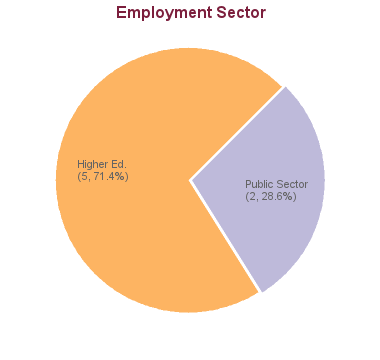
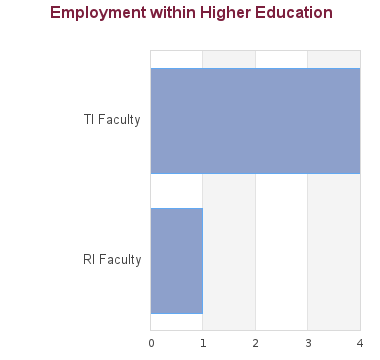
Typically our graduates become instructors or professors in other departments or schools of social work, though a number also work in social welfare administration, the policy arena, and social development.
| 2024 | 2023 | 2022 | 2021 | 2020 | |
|---|---|---|---|---|---|
| Applications | 12 | 14 | 10 | 16 | 17 |
| Offers | 3 | 7 | 7 | 5 | 7 |
| New Registrations | 2 | 5 | 3 | 5 | 5 |
| Total Enrolment | 22 | 25 | 20 | 19 | 16 |
Students in research-based programs usually require a faculty member to function as their thesis supervisor. Please follow the instructions provided by each program whether applicants should contact faculty members.
These videos contain some general advice from faculty across UBC on finding and reaching out to a supervisor. They are not program specific.
This list shows faculty members with full supervisory privileges who are affiliated with this program. It is not a comprehensive list of all potential supervisors as faculty from other programs or faculty members without full supervisory privileges can request approvals to supervise graduate students in this program.
| Year | Citation |
|---|---|
| 2024 | Dr. Watermeyer studied Tibetan organizations in Canada to explore how diasporic identity shapes social helping notions, activities and structures. Her research argues the need to expand dominant understandings of social help beyond its state-centered, utilitarian emphasis to include alternative modes of culture-based kinship practices. |
| 2024 | Parent-adolescent disputes tend to be seen through a lens of child noncompliance and parental control. Dr. Ji's studies challenge this view by examining resistance in parent-adolescent interactions at the dyadic level of analysis. He then tested a training he developed showing that social work students can be trained to see conflict complexly. |
| 2023 | Dr. Ono explored how mothers facing violence navigate child protection and family law systems. Her research uncovered how practices are ideologically-driven by the legal principle best interests of the child, causing more harm to women and children. This contributes to social work by highlighting how texts can be tools of resistance not complicity. |
| 2022 | Dr. Johnson explored the experiences of adolescents who had completed treatment for cancer. Posttreatment is an invisible phase in the cancer trajectory yet holds significant implications for youth. This research highlights posttreatment as a dynamic period of time and compels clinical attention to it within adolescents' cancer survivorship care. |
| 2020 | Dr. Khadka explored the exclusions based on race, gender, class, and linguistic and cultural competence that shape the experience of labour market negotiations among Bhutanese refugees in Canada. His research recommends inclusive labour policies to promote successful refugee resettlement. |
| 2019 | Dr. Asgarova explored the experiences of mothers who received a prenatal diagnosis of Down syndrome for their baby and decided to continue their pregnancy. This research study assists us in understanding the social, informational and emotional needs of these mothers, and provides insight as to how their experience could be improved. |
| 2019 | Success in employment for people with disabilities is often hampered by the negative attitudes of others within the workplace. Dr. Breen's research has resulted in his development of a questionnaire to measure these attitudes. The results of these measurements will aid in planning and determining the success of workplace training interventions. |
| 2018 | Dr. Johnston worked with Inuit mothers in Nunavut to examine child welfare in relation to changes families experience due to mining in the territory. Her research informs standards, legislation, policies and programs to protect Inuit children and youth in ways that respect and incorporate Inuit culture and traditional knowledge. |
| 2018 | Dr. Rockwell explored older adults' experiences of moving to assisted living: a relatively new model of housing and support for older adults in BC. By comparing participants' stories with the larger values and regulations of assisted living, Dr. Rockwell identified areas for improvement, as well as promising practices to help residents settle in. |
| 2017 | What is meant when we promote the idea of development? Dr. Murray explored political meanings of "development" in one site of social struggle-a public hearing on building heights in Vancouver's Chinatown. She offers an activist method for unpacking the social, material and historical dynamics through which such clashing public truths are produced. |
Social Work provides students with backgrounds in social work, social policy, social development, opportunities for advanced scholarship, and professional growth in the context of research-intensive programs. Students are prepared for university teaching and research (theoretical and applied), including program evaluation. The program can also provide critical components for professional practice in research, policy analysis, and human service management.
Departments/Programs may update graduate degree program details through the Faculty & Staff portal. To update contact details for application inquiries, please use this form.